
Asking Crazy Questions About Normal Things

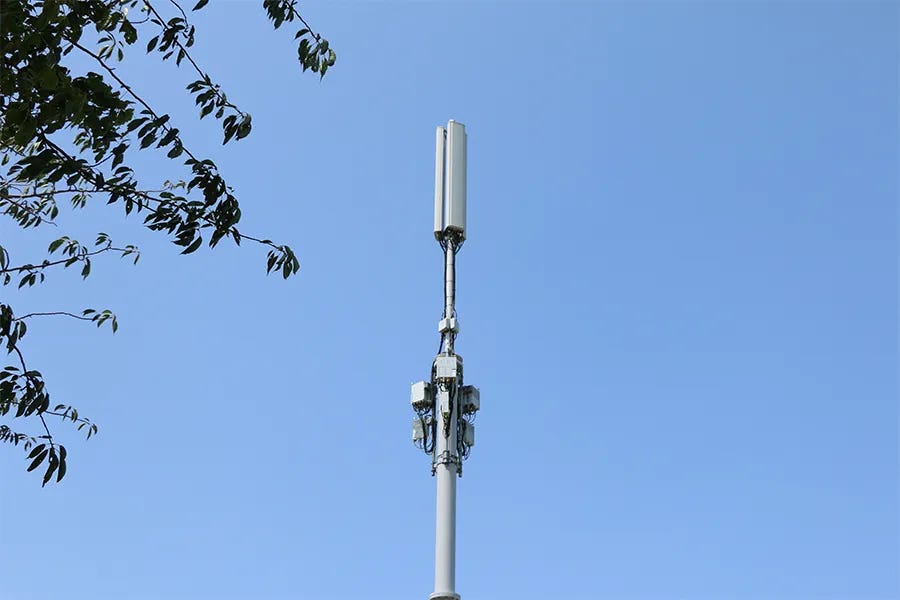
One of the more curious episodes of the Covid-19 period was the suspicions about whether the 5G cell phone towers were to blame for the flu-like symptoms.
Most people have forgotten this theory by now. But at the time, it had serious implications, especially when worried Kiwis and people in other countries started burning or destroying cell towers out of fear.
But a few years later, it’s worth revisiting if the theory had a kernel of truth to it. Were the 5G towers causing people to die with flu-like symptoms? Probably not. Yet there is plenty of solid research showing that telecommunications companies would prefer if you stopped asking whether their infrastructure is hurting people.
Because it turns out, we don’t know nearly enough about the effects of cell phone radiation to fully discount that they aren’t having a dangerous effect on humans.
The original theory about 5G radiation fits into a box I like to call “convenient distractions.” It works a bit like this. Since blaming Covid-19 on 5G towers made people sound crazy, it became easy to scare people away from looking deeper into whether cell phone radiation was dangerous. In the propaganda business, we call that a “two-for-one deal.” No coupons are necessary.
Another good example is the “flat earth” theory, which acts as a convenient distraction to spook people away from asking why we no longer have airships that use helium to achieve free travel by using wind power (I might tackle this topic in a future column).
Before Covid-19, it was a common discussion in mainstream news as to how telecom systems may be pumping out harmful amounts of radiation. One plausible reason for the decline of bee populations was blamed on this radiation. According to research, signals from cell towers could disrupt internal bee navigation, causing them to lose direction and fail to return to their hive.
Similarly, I recently found myself wondering where all the bugs in the air had gone. When I was a child, during long road trips or even across town at certain times of the day, the front windscreen would generally be painted with bodies of dead bugs. These days, you’re lucky to find a handful of bug carapaces, at most. Clearly, something has changed.
Thankfully, there has been some research on cell phones and cell towers. It offers an intriguing set of answers for what might be happening with the bugs and potentially with some modern illnesses.
A leading researcher on environmental hazards is Devra Davis, founder and president of the scientific think tank Environmental Health Trust. She is currently a Visiting Professor of Medicine at the Hebrew University Hadassah Medical School in Israel.
Davis’s work included the 2010 book Disconnect: The Truth About Cell Phone Radiation, What the Industry Is Doing to Hide It and How to Protect Your Family. The book reviewed her own team’s research and the wider scientific literature. Her central thesis is that we don’t know much about the public health risks of this technology, and that lack of knowledge should worry us.
She points out that we are all living through a worldwide experiment without a control group. Scientists simply don’t know what the long-term effects of microwave radiation might be on humans, and there’s no way to satisfactorily test the population because there are about 14 billion cell phones in the world already. Simply put, everyone is impacted by microwave radiation poisoning to varying degrees. And the effects could be manifesting in ways we mistake for other symptoms.
For example, research has generally avoided looking at the effects of cell phone use among young people, focusing instead on adults. Davis said the small amounts of research on children should set off alarm bells for parents entertaining their infants with iPads and other wireless devices.
The microwave oven, the cell phone, baby monitors and Wi-Fi all use similar microwave frequencies, differing only in power. What sets cell phones apart is that they deliver pulsed microwave energy, rather than consistent wavelengths. This irregular pulse, not the power, appears to be most biologically important for judging negative effects on humans, Davis said. Indeed, continuous wavelength electromagnetic energy can actually be therapeutic and is used widely in medicine today.
Cell phones, on average, “talk” with the nearest cell tower about 900 times each minute. This means the worst time to put a phone near your ear, according to Davis, is just after a call is answered, since that’s when the phone uses maximum microwave power. During a call, the power levels rise and fall irregularly, heating up and damaging the brain and any nearby tissue.
Due to the volume differences between children's and adults brains, Davis said the negative effects of microwave radiation are proportionally worse for children (Gandhi and Kang, 2002). Holding a phone near the brain for any length of time is overall a terrible idea, the research showed, and neither is it good for children to hold iPads (two-way radiating devices) in their laps unless it is in aeroplane mode.
But Davis also pointed out that a man storing a cell phone in his front leg pocket can expose his reproductive organs to dangerous levels of radiation. Based on convincing data from multiple studies, the US Consumer Report now recommends that no one store cell phones in their pockets since it would immediately exceed recommended radiation exposure guidelines.
This is important because research also shows sperm counts across the world have declined by more than 50% over the past half-century. A 2022 literature review found sperm counts fell about 1% per year between 1973 and 2018. It also showed this decline was accelerating to about 2.64% per year.
To put this in perspective, on a population level, the average sperm count dropped from 104 million to 49 million per millilitre.
The researchers scratch their heads about what could be causing the decline. But Davis suggested the cumulative impact of heat and microwave radiation emitted by cell phones stored in front leg pockets is likely to be a major contributing factor.
One of the few studies undertaken on this subject was through the University of Newcastle in Australia. Researchers exposed healthy sperm samples to cell phone radiation and found that mobility (how well sperm swim) dropped by 65% while the damage to mitochondrial DNA increased by 3x. Other research on sperm damage led the 7th Edition of Biostatistics in Medicine to confidently announce that the evidence was causal, which is a highly unusual thing to say in science.
Davis said that although uncertainty exists about what cell phones might do to humans, there is zero uncertainty about how cell phone radiation damages sperm. The evidence is clear, she said, that it is a terrible idea for men to store active cell phones anywhere near their testes.
The reason for the danger goes back to the pulsing nature of cellular radiation. As above, cell phones are constantly “talking” to cell towers. And each time a device moves from one tower to another, it receives high-power microwave energy. If a cell phone is located near human tissue during these tower transitions, the cumulative effect of radiation damage can be enormously dangerous.
The problem is, no one in any position of authority has bothered to address this issue since Covid-19. The evidence is building up, although researchers find it difficult to get funding from telecommunications and phone companies for obvious reasons. Meanwhile, people go about their day, potentially getting sick and blaming that illness on all kinds of things.
I remember many years ago attending a gathering of high society Aucklanders. I got talking with someone from one of the city’s universities who told me about his studies into the effects on humans of fluorescent lighting in offices. He was concerned about what the early data was showing and explained that he struggled to get more funding. Apparently, no one wanted to talk about what might be going on in our supposedly “safe” offices.
Since that conversation, I’ve often wondered what became of those studies and if they turned up anything conclusive about harm. Seemingly innocuous things like fluorescent lighting are great examples of what misses our collective attention precisely because they are so normal.
But sometimes “normal” deserves the most scrutiny, especially when companies are making a lot of money off the product or service and hiding behind “convenient distractions.”
If I were still a journalist, I’d be asking Spark, Vodafone, Apple and Nokia if they have set any money aside for future litigation when (not if) the evidence emerges that cell phones are a causal factor in many types of modern illnesses. Those sorts of questions are not crazy to ask.